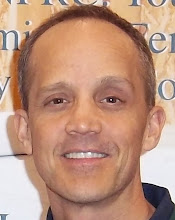
At its meeting Monday morning, the Door Task Group moved forward with the development of standard door simulation spreadsheets. "It's an attempt to provide all simulators with a single, uniform method for simulating doors," said Chair Dave De Block.
The task group worked on two spreadsheets, one for steel and fiberglass doors and one for wood doors. De Block said that the task group will discuss the new versions of the spreadsheets during its next conference call.
De Block said that the task group also discussed developing accurate definitions for terms relating to how doors are made, and that the group plans to reach out to four door manufacturers to get their input.
Monday, April 12, 2010


TDD Task Group Plans Dinner
To continue its discussion of how best to provide fair, accurate and credible visible transmittance ratings for tubular daylighting (TDD) devices, the TDD Task Group will meet tonight over dinner. For more details, check with task group Chair Dave De Block.
Chair Presents Homework Assignment to Attendees
 During the opening session, NFRC Chair Joe Hayden presented his traditional “homework” question to the group, but with a new twist. He asked attendees to step up to the microphone to generate discussion on the spot.
 Hayden posed this question to the group: What can NFRC do to streamline or simplify its Production Certification Program? After hearing some initial feedback, he posed another question to generate further discussion: What if NFRC certified only center-of-glass for SHGC and Visible Transmittance?
He encouraged participants to share their thoughts on these questions throughout the meeting.
Jeff Baker Accepts NFRC's Member-of-the-Year Award
 NFRC’s Opening Session during its Spring Membership Meeting in New Orleans included the presentation of the member-of-the-year award to Jeff Baker.
Joe Hayden, Chair of NFRC’s Board of Directors (BOD), said Baker would receive free registration for an upcoming NFRC meeting and up to $1500 reimbursement for accommodations. Hayden also said that Baker has supported NFRC’s mission as a 501 (c) (3) organization and has consistently made an outstanding contribution to the organization for many years.
The member-of-the-year award was established in 2008, and the first recipient was Roland Temple. Although Temple has since retired, he made a special point of attending the Spring Membership Meeting specifically to present the 2009 award to Baker.
“It is a tremendous distinction to honor Jeff Baker, who is a good friend and a valuable colleague,” Temple said. Temple added that a large part of NFRC’s success can be directly traced back to Baker’s contributions.
“This is an honor that I will treasure for a long time,” Baker said after accepting the award during a standing ovation. “It has been a great pleasure working with everyone at NFRC, and I have been very fortunate to have their support over the years. I look forward to continuing to serve and doing as much as I can to drive the fenestration forward in this day and age of evolving technology.”
CMA Tech TG To Seek Board Direction
During a brief meeting, the CMA Technical Task Group decided to seek direction from the NFRC Board of Directors regarding the rating and labeling of spandrel systems before proceeding with an RFP for a Spandrel System Performance Validation Study.
Larsen Recruits Seven to Help With Improving NFRC's 302
The Optical Properties Subcommittee convened from 9:00 - 10:00 a.m. During the meeting, the Optical Spectral Data Task Group proposed significant changes in the NFRC 302 to better ensure that accurate optical spectral data are included in the International Glazing Database (IGD).
A number of issues came up during the meeting.
1. Tom Culp, from Birchpoint Consulting, presented a negative. He said he believes a lot of unnecessary details about the review process and appeals process are being deleted. Culp also said people commonly complain about chasing the third decimal point in the U-factor.
2. Steve Farrar, of Guardian, said the proposed ballot provides no analysis of the need for changing the established procedure, whereby glass manufacturers are responsible for providing spectroradiometric data for the IGD. Farrar also said the ballot provides no assessment of the cost of the proposed procedure and the associated impact on the new product commercialization. Furthermore, Farrar said the proposal provides no basis for the recommended four-fold tightening in the tolerance for emittance. Farrar believes the tolerance should be related to its impact on actual product ratings, not to the precision of modern testing equipment. Finally, Farrar said any change in measurement tolerance must be consistent with the instrument manufacturer’s statement of capability for the intended measurement.
3. Joe Hayden, of Pella Corporation, and Chairman of NFRC’s Board of Directors (BOD) said that section 3.3 makes reference to a list of approved labs in an “Appendix TBD.” This appendix, however, does not exist in the ballot’s draft. Hayden said this needs to be corrected before final publication.
4. Steve Johnson, of Andersen, said there is a need for greater clarity around emittance limits and how compliance to those emmitance limits will be demonstrated.
The meeting concluded with Jim Larsen asking the crowd if anyone wanted to work with him study the comments and work on resolving them. Seven attendees volunteered. They include the following:
1.Bipin Shah
2.Brian Crooks
3.Charles Hayes
4.Willie DuPont
5.Tim Singel
6.Dave Duly
7.Lisa Winkler
A number of issues came up during the meeting.
1. Tom Culp, from Birchpoint Consulting, presented a negative. He said he believes a lot of unnecessary details about the review process and appeals process are being deleted. Culp also said people commonly complain about chasing the third decimal point in the U-factor.
2. Steve Farrar, of Guardian, said the proposed ballot provides no analysis of the need for changing the established procedure, whereby glass manufacturers are responsible for providing spectroradiometric data for the IGD. Farrar also said the ballot provides no assessment of the cost of the proposed procedure and the associated impact on the new product commercialization. Furthermore, Farrar said the proposal provides no basis for the recommended four-fold tightening in the tolerance for emittance. Farrar believes the tolerance should be related to its impact on actual product ratings, not to the precision of modern testing equipment. Finally, Farrar said any change in measurement tolerance must be consistent with the instrument manufacturer’s statement of capability for the intended measurement.
3. Joe Hayden, of Pella Corporation, and Chairman of NFRC’s Board of Directors (BOD) said that section 3.3 makes reference to a list of approved labs in an “Appendix TBD.” This appendix, however, does not exist in the ballot’s draft. Hayden said this needs to be corrected before final publication.
4. Steve Johnson, of Andersen, said there is a need for greater clarity around emittance limits and how compliance to those emmitance limits will be demonstrated.
The meeting concluded with Jim Larsen asking the crowd if anyone wanted to work with him study the comments and work on resolving them. Seven attendees volunteered. They include the following:
1.Bipin Shah
2.Brian Crooks
3.Charles Hayes
4.Willie DuPont
5.Tim Singel
6.Dave Duly
7.Lisa Winkler
New Member Orientation Kicks off NFRC's Spring Membership Meeting
NFRC’s Spring Membership Meeting is underway in New Orleans. The meeting began at 8:00 a.m. One of the first presentations was a new member orientation program.
The orientation began with NFRC’s CEO, Jim Benney, mentioning that there are 135 people in attendance, including 31 new attendees. This is the most heavily attended meeting in NFRC’s history.
Benney pointed out four of NFRC’s over-riding goals:
1. To deliver valid data to all customers, which include the public and building industry and code officials
2. To deliver a successful energy rating program to the commercial fenestration industry
3. To deliver an improved and simplified ratings program for the residential fenestration industry
4. To deliver new rating procedures and programs for existing and emerging technologies
The meeting wrapped up with NFRC’s new Membership Manager, Anita Marsh, speaking about two of the key benefits of becoming an NFRC member. Marsh said the first one is the ability to make one’s voice heard. The second benefit Marsh mentioned is the ability to vote on issues that influence the fenestration industry.
The orientation began with NFRC’s CEO, Jim Benney, mentioning that there are 135 people in attendance, including 31 new attendees. This is the most heavily attended meeting in NFRC’s history.
Benney pointed out four of NFRC’s over-riding goals:
1. To deliver valid data to all customers, which include the public and building industry and code officials
2. To deliver a successful energy rating program to the commercial fenestration industry
3. To deliver an improved and simplified ratings program for the residential fenestration industry
4. To deliver new rating procedures and programs for existing and emerging technologies
The meeting wrapped up with NFRC’s new Membership Manager, Anita Marsh, speaking about two of the key benefits of becoming an NFRC member. Marsh said the first one is the ability to make one’s voice heard. The second benefit Marsh mentioned is the ability to vote on issues that influence the fenestration industry.
Subscribe to:
Posts (Atom)