Monday, November 8, 2010

Windows May Have a Future in PGE's Sustainable Electric System Initiative

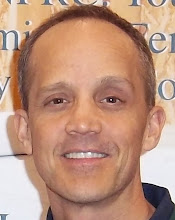
Larson speaks about PGE's sustainable electric system
The Opening Session got underway with Duane Larson, Director, Mass Market Energy Solutions and Service Integrated Demand-side Management, for Pacific Gas & Electric (PGE) delivering the keynote speech.

Larson began his presentation by pointing out that Newsweek magazine ranked PGE the greenest utility in the U.S. in 2009. Accordingly, his presentation was entitled, “Enabling a Sustainable Electric System.”


Larson emphasized the need for PGE to promote renewable energy. In promoting this initiative, the company has undertaken an initiative to educate the public regarding energy use management. PGE seeks to provide this education by understanding its customers on a personal level so it can provide them with customized advice on how to save energy.


“It’s all about working together so we can help create an integrated management system inside the customer’s home,” Larson said. “This helps us become partners with our customers, and it puts PGE in a great position to deliver solutions for managing costs.”


During the question and answer session, Marc LaFrance (DOE) asked Larson how he sees windows fitting into PGE’s future.


Larson responded, saying that utility providers across California are always open to considering new technologies and implementing incentives depending on the potential gains.

Hanlon Discusses Survey Results During PCP TG Meeting

During this morning’s Product Certification Program (PCP) Review Task Group Meeting, NFRC’s Director of Existing Programs, Scott Hanlon, presented the results of a survey that solicited concerns on placing the full Certified Product Directory (CPD) number on the temporary label.

The inclusion of the full number on the label was approved by NFRC’s Board of Directors (BOD) during spring 2010 and slated for implementation by January 2012. The survey was conducted to determine specifically what potential obstacles were foreseen.


Hanlon reported that implementation emerged as the primary concern. Many respondents indicated they were unsure whether they could readily gain access to needed information, update appropriate databases, and complete required software modifications. These respondents also said the time and cost associated with resolving these issues would be burdensome.


Other respondents indicated they feared such a change would increase the likelihood of mislabeling while adding complexity to the labeling process.


NFRC Chair, Joe Hayden, said the ultimate goal of this initiative should be to enable NFRC customers of every description to be able to simply remove the label from a product, enter it into their computer, and have just one product show up in NFRC’s CPD.


Hanlon plans to convey the results of the survey to the Certification Policy Committee (CPC) and to NFRC’s BOD for review. In the meantime, however, the initiative will move forward, and barring any intervention, will not be revised.


Garage Door SHGC TG Discusses NFRC 200/201

The Garage Door Solar Heat Gain Coefficient (SHGC) Task Group met this morning and discussed the NFRC 200 and 201.

This working Task Group is charged with drafting a revised method of calculating garage door SHGC for inclusion in NFRC 200 based on the absorptance of the non-glazed areas. A new default absorptance will be evaluated and checked against NFRC 201 for accuracy. The group’s work is subject to review as necessary by NFRC’s SHGC Subcommittee.


Chair, Joe Hetzel, (DASMA), reported that a change to NFRC 200 following this summer’s virtual meeting removes the requirement for a specific panel size for garage doors, rather than being descriptive, and allows the manufacturer to make this determination.


Hetzel also discussed DASMA’s research on testing to NFRC 201. Several members expressed concern about calculating the SHGC of garage doors with just 20 – 25 percent glazing.

In certain cases, the SHGC was found to be 0.09. Testing conducted per NFRC 201, however, validates the calculation methods in NFRC 200.

Garage/Rolling Door U-factor Task Group Discusses Vertical Jamb Hardware

The Garage/Rolling Door U-factor Task Group convened this morning and discussed a DASMA research project that involved the evaluation of rolling steel door vertical jamb hardware.

This Task Group evaluates all known existing testing and simulation methods including available data or conclusions from use of such methods, to determine practicality of simulation, and to draft recommended provisions – including multiple testing and/or simulation methods if feasible – for review by the NFRC U-Factor Subcommittee.

Chair, Joe Hetzel, explained that the DASMA project considered whether vertical jamb hardware needed to be mounted in order to achieve accurate test results on rolling steel doors. It also sought to determine whether they play enough of a role to influence results.

Hetzel said test results improved slightly when the hardware is removed and added that it is appropriate to suggest removing the hardware for simulation in NFRC ratings.

NFRC Fall Membership Meeting Kicks off with New Member Orientation

NFRC's CEO, Jim Benney, addresses new members
The National Fenestration Rating Council’s (NFRC) Fall Membership Meeting got underway at 7:00 a.m. today with a new member orientation.

The orientation started with NFRC’s CEO, Jim Benney, addressing the 34 new members saying, “NFRC is important because energy is important.” Benney also explained to the group that there are many complex issues involved with energy, and as NFRC members, they can help make a difference in the world.

NFRC’s Director of Existing Programs, Scott Hanlon, followed Benney’s opening address by explaining NFRC’s committee structure. Hanlon described how the majority of work done by NFRC members takes place in its Committee Structure through Task Groups, Subcommittees, and Committees. Hanlon emphasized that NFRC develops its standards and program documents in accordance with consensus procedures and encouraged all of the new members to get involved and stay active.
 

NFRC’s Membership Manager, Anita Marsh, echoed Hanlon’s comments, pointing out that one of the most valuable aspects of NFRC membership is that it provides a voice and a vote. Marsh said other membership benefits include access to inside information, networking opportunities, and the chance to build consumer trust in the marketplace.


“Our members lead change, and making the most of your membership helps NFRC serve the public good,” Marsh concluded. “The transformation of our industry starts with you.”


Sunday, November 7, 2010

NFRC Meeting Attendees Tour LBL, Broaden Knowledge of Fenestration Testing Procedures

Jonathan Slack (left), Lawrence Berkeley National Laboratory (LBL) scientist in the Building Technologies Department, Environmental Technologies Division and National Fenestration Rating Council (NFRC) meeting attendee, Gregg Vincent, Natural Light Energy Systems, discussed how LBL is working to help reduce the amount of energy lost through windows during a tour of the LBL facility on Sunday afternoon.

The tour, held one day prior to NFRC's Fall Membership Meeting in San Francisco, hosted 32 meeting attenees in all.

According to its Website, LBL is a member of the national laboratory system supported by the U.S. Department of Energy through its Office of Science. It is managed by the University of California (UC) and is charged with conducting unclassified research across a wide range of scientific disciplines, including the energy efficiency of windows.

Located on a 200-acre site in the hills above the UC Berkeley campus, Sunday’s tour offered visitors some unique insight regarding the lab’s work along with some spectacular views of the sunset over the San Francisco Bay.


One of the core messages Slack delivered during the tour, is that energy losses through windows in the U.S. exceed 3.9 quadrillion BTU’s, which costs about $32 billion annually.
Slack said one thing LBL is doing to help improve this situation is testing a prototype smart window, which uses LBL’s Transition Metal Switchable Mirrors (TMSM). Such technology may be able to save 25 percent or more of this energy.

Slack added that when used as an active window coating, TMSMs can offer both improved building energy performance and a new method for daylighting control. Furthermore, dynamically controlled windows respond to changes in lighting and weather conditions in real time, controlled by either occupants or sensors monitoring ambient conditions. The result is optimal energy performance, daylighting levels, and occupant comfort.


Many of those who attended the LBL tour said Slack's presentation, along with presentations provided by several other LBL staff members, broadened their knowledge of fenestration testing procedures and added that they would like to see NFRC offer similar educational opportunities in conjunction with future meetings.


Live coverage of NFRC's Fall Membership Meeting will begin tomorrow morning. Be sure to check back frequently for updates.

Friday, November 5, 2010

Follow NFRC's Fall Membership Meeting Here

If you can’t attend The National Fenestration Rating Council’s (NFRC) Fall Membership Meeting next week, there’s no need to despair -- we’ll bring the meeting to you.

The membership meeting will take place November 8 - 11, 2010 at the Hilton San Francisco Financial District Hotel, and you can follow the proceedings as they happen -- right here on NFRC News Now.

This online news service will be updated continually to deliver the latest breaking news and information on the changes and complexities that define the fenestration industry and may influence the way you conduct business.

Please remember – NFRC News Now is not just operational during NFRC meetings. It’s always being updated and always available.

If you have any questions about NFRC News Now, please contact NFRC’s Communications & Marketing Manager, Tom Herron.